2026-10-08 ·
Milwaukee's Historic Homes: Water Damage Restoration Challenges
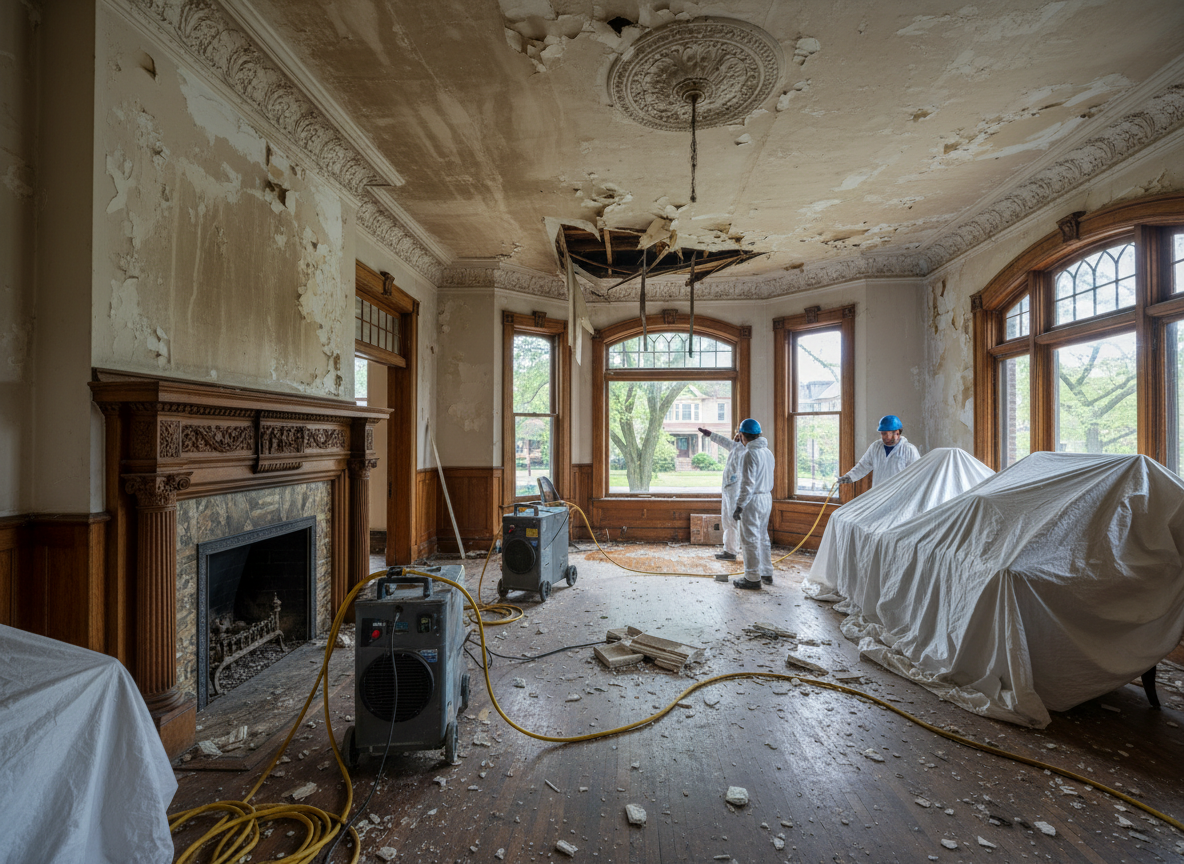
Restoring water damage in Milwaukee's historic homes can be a complex undertaking, often requiring specialized knowledge and techniques to preserve the integrity and character of these older structures. Unlike modern construction, buildings from the late 19th and early 20th centuries, common in neighborhoods like Bay View, Riverwest, and the East Side, frequently feature materials such as plaster walls, original hardwood floors, and intricate woodwork that demand careful handling. The humid continental climate of Milwaukee, characterized by cold, snowy winters and warm, humid summers, can exacerbate water damage issues. Winter's freeze-thaw cycles can stress foundations and plumbing, while summer's humidity can accelerate mold growth in damp areas, especially in older homes with less efficient insulation and ventilation. Addressing these issues effectively often involves understanding the specific vulnerabilities of these homes, from potential foundation leaks exacerbated by Milwaukee's soil conditions to plumbing failures in aging pipe systems.
Understanding Historic Milwaukee Housing Stock
Milwaukee boasts a rich architectural heritage, with many homes dating back to periods when building codes and materials differed significantly from today. This is particularly true in areas like the Third Ward and Walker's Point, which have seen extensive renovation and restoration efforts. Older homes often incorporate materials like lathe and plaster, which are far more susceptible to damage from moisture than modern drywall. When water infiltrates these walls, the plaster can crack, crumble, or even detach from the lath, requiring careful drying and stabilization or, in severe cases, complete removal and replacement to match existing finishes. Original hardwood floors, a hallmark of many Milwaukee residences, can warp, buckle, or stain when exposed to prolonged moisture. While some floorboards can be salvaged and refinished, others may need to be meticulously replaced to match the original wood type and width. The presence of old-growth lumber in framing and trim also requires a delicate touch during restoration to avoid unnecessary damage. Understanding the construction methods, such as balloon framing common in older Milwaukee homes, is crucial for effective structural drying and preventing secondary damage.
Climate and Seasonal Water Damage Risks in Milwaukee
Milwaukee's climate presents a unique set of challenges for homeowners and water damage restoration professionals. The cold, snowy winters mean that frozen pipes are a significant concern. When temperatures plummet, especially in unheated or poorly insulated areas like attics or crawl spaces, water within pipes can freeze, expand, and burst. This can lead to sudden and extensive water damage, often requiring immediate Emergency Water Removal. The thawing process can also reveal hidden leaks that may have occurred during the freeze. Conversely, Milwaukee's warm, humid summers create conditions ripe for mold growth. High humidity levels, coupled with potential water intrusion from heavy rain or appliance failures, can cause mold to spread rapidly within walls, basements, and attics. Homes without adequate dehumidification or ventilation systems are particularly vulnerable. The proximity to Lake Michigan also means that severe storms can bring heavy rains and high winds, potentially leading to roof leaks or basement flooding, especially in areas with older drainage systems. Even areas like Washington Heights or Shorewood, while perhaps less prone to flooding than some lower-lying areas, can experience significant damage from severe weather events.
Common Water Intrusion Points in Older Homes
Older homes, regardless of their specific Milwaukee neighborhood, often have common vulnerabilities to water intrusion. Roof leaks are frequent culprits, especially in homes with older roofing materials or flashing that has deteriorated over time. Issues with gutters and downspouts, which may not be adequately sized for heavy rainfall or can become clogged with debris, can cause water to back up and seep into the roof structure or around the foundation. Basement water intrusion is another major concern, particularly in Milwaukee's humid continental climate. Older homes may have foundational issues, cracks in basement walls, or inadequate sump pump systems, leading to water entering during heavy rains or snowmelt. The terrain and soil conditions in Milwaukee can also play a role; areas with clay-heavy soil may retain more water, increasing hydrostatic pressure against basement walls. Appliance failures, such as a leaking washing machine or a burst water heater, are also common causes of water damage that can affect any home, regardless of age. Even seemingly minor leaks from plumbing within walls or under floors can go undetected for extended periods, leading to significant structural damage and the potential for mold growth. For homeowners in areas like Wauwatosa or Glendale, understanding these common entry points is the first step in preventing more extensive damage.
Specialized Restoration Techniques for Historic Properties
Restoring water damage in historic Milwaukee homes requires a different approach than standard restoration. The goal is always to repair and restore rather than replace, whenever possible. This means employing techniques that are gentle on original materials. For instance, instead of ripping out entire sections of plaster, professionals might use specialized drying equipment and techniques to dry the wall cavity and stabilize the plaster, minimizing the need for cosmetic repairs. Similarly, when dealing with water-damaged hardwood floors, methods like subfloor drying and specialized dehumidification can often save the original flooring, preserving the home's historical character. Structural Drying and Dehumidification Services are critical, but must be carefully managed to avoid over-drying or damaging sensitive materials. For severe damage, or when mold remediation is necessary, professionals must be trained to work around and protect historic features. The Milwaukee Art Museum's historic architecture, for example, highlights the importance of preservation. While a museum is different from a home, the principles of respecting and carefully restoring original materials are the same. King Water Damage Restoration Service LLC understands the unique needs of Milwaukee's older housing stock.
Addressing Mold and Odor After Water Intrusion
Water damage, especially in older homes with less efficient ventilation, can quickly lead to secondary problems like mold growth and persistent odors. The humid summers in Milwaukee are particularly conducive to mold proliferation, which can thrive in damp, dark environments like basements, attics, and wall cavities. If water has been present for more than 24-48 hours, mold can begin to colonize. Effective Mold Remediation is crucial, not just for cosmetic reasons, but for indoor air quality and the health of occupants. This involves identifying the source of moisture, safely removing contaminated materials, and thoroughly cleaning affected areas. Odor removal is another significant aspect of water damage restoration. Stagnant water, especially if it contains sewage or other contaminants, can leave behind unpleasant and lingering smells. Advanced techniques, including ozone treatments and specialized deodorizing agents, are often employed to neutralize these odors, ensuring the home is not only dry but also fresh-smelling. This is particularly important in homes with original finishes that can absorb odors more readily. For residents in areas like East Side or Wauwatosa, prompt attention to both water and its aftermath is key.