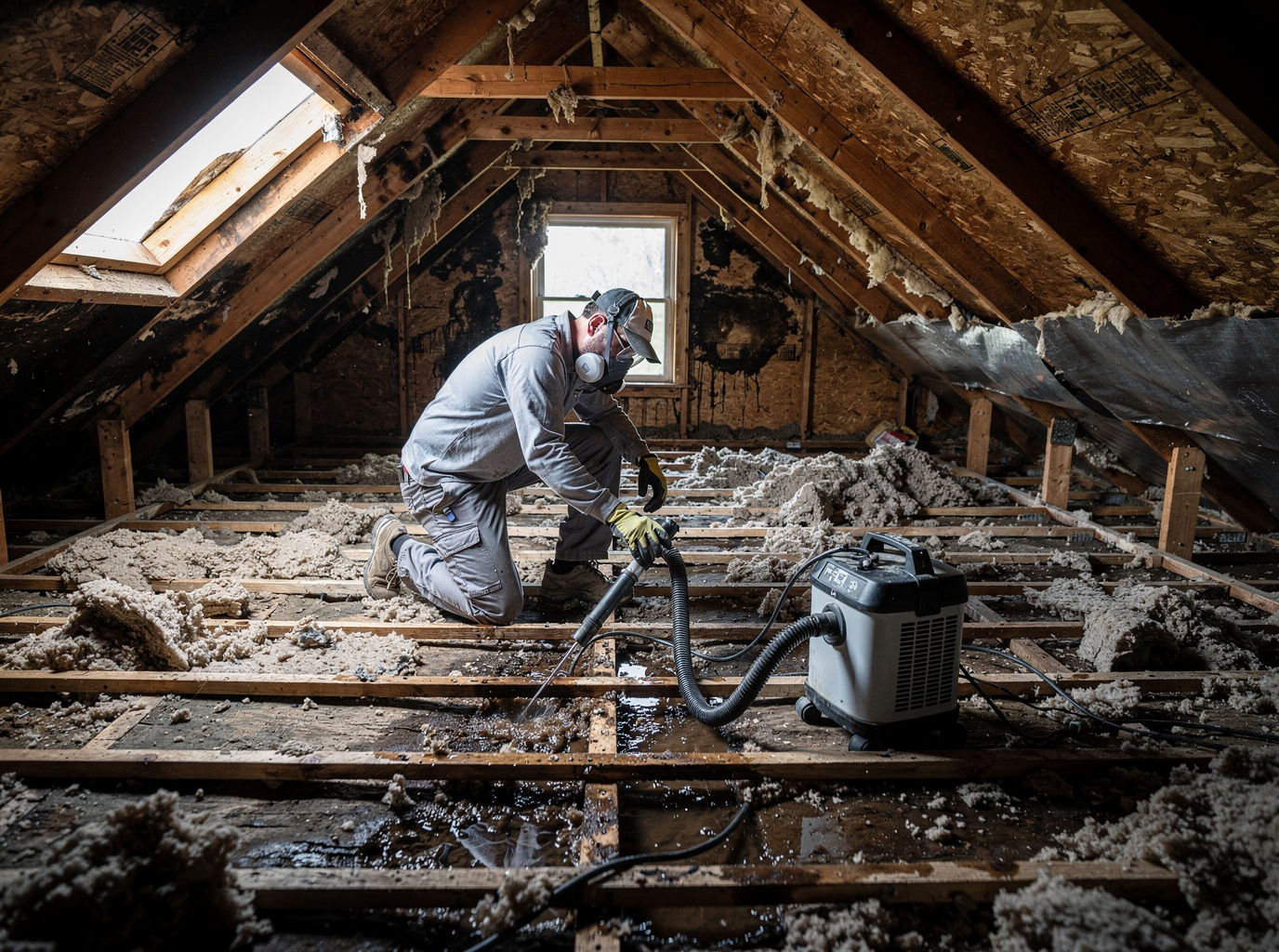
Attic water damage in Milwaukee presents unique challenges due to our humid continental climate. The cold, snowy winters can lead to ice dams on older homes, forcing water down into attics. Conversely, warm, humid summers can exacerbate issues from roof leaks or AC condensation, creating breeding grounds for mold in the dark, often poorly ventilated attic spaces common in homes throughout Bay View, Riverwest, and the East Side. We understand how these seasonal shifts, combined with the typical construction of Milwaukee-area housing stock – often built in the early to mid-20th century – contribute to vulnerabilities. Addressing attic water damage promptly is crucial to prevent structural compromise and widespread mold growth that can affect the entire home, from the Third Ward to Walker's Point.
Restoring attic water damage requires a meticulous approach, especially in Milwaukee's diverse neighborhoods. Whether the source is a burst pipe from a freezing winter night, a storm surge impacting the Lakefront area, or a slow leak from a damaged shingle common on older properties near Pabst Mansion, thorough drying and dehumidification are paramount. We pay close attention to insulation saturation, structural wood integrity, and the potential for hidden moisture pockets that can develop in the complex rooflines found in areas like Shorewood or Wauwatosa. Our process aims not just to remove visible water but to address the underlying humidity and prevent secondary damage, ensuring the long-term health of your home.
Attic Insulation and Moisture Control
The type of insulation in your attic significantly impacts how water damage is handled. Fiberglass batts, common in many Milwaukee homes, can hold a substantial amount of moisture, making thorough drying difficult and often requiring removal and replacement. Blown-in cellulose or fiberglass can also absorb water, leading to clumping and reduced R-value. Proper ventilation is key, especially given our climate's extremes. Inadequate soffit and ridge vents, or blocked attic fans, can trap moisture, turning minor leaks into major mold problems. We assess ventilation systems and recommend improvements to prevent future issues, particularly in neighborhoods with dense housing like Washington Heights or near Glendale and Brown Deer.
Technician insight
In Milwaukee, the thing that catches most people out with attic water damage is how quickly mold can take hold in the humid summers, especially in older homes with less-than-ideal ventilation. People often underestimate how much moisture the insulation can hold after a winter ice dam leak, thinking it will just dry out on its own, but that trapped moisture is a perfect environment for mold.
Ice Dam Leak in Bay View Attic
A homeowner in Bay View reported water stains appearing on their ceiling after a significant winter storm. We found extensive saturation in the attic insulation caused by an ice dam on the north-facing slope of the roof. Our team extracted the water, thoroughly dried the attic using specialized equipment, and recommended improved attic ventilation to prevent future occurrences.
Attic Water Damage Restoration Services We Offer
✓Attic Leak Detection and Repair
Pinpointing the exact source of attic leaks, whether from roof damage, plumbing issues, or condensation, and performing necessary repairs to prevent further water intrusion.
✓Attic Water Extraction
Utilizing specialized equipment to quickly remove standing water from your attic, minimizing damage to insulation, wood structures, and stored items.
✓Attic Dehumidification and Drying
Implementing industrial-grade dehumidifiers and air movers to thoroughly dry out saturated attic materials and prevent mold growth.
✓Attic Mold Remediation
Safely identifying, containing, and removing mold growth caused by attic water damage, followed by antimicrobial treatments.
✓Damaged Insulation Removal and Replacement
Removing waterlogged or mold-infested insulation and installing new, high-quality insulation to restore your attic's energy efficiency.
✓Attic Structural Drying and Repair
Focusing on drying and repairing any compromised wooden beams, rafters, or sheathing within the attic structure.
How it works
- 1
Inspection and Assessment
We begin with a comprehensive inspection of your attic to identify the source and extent of water damage, checking for leaks, saturation, and potential mold growth.
- 2
Water Extraction and Removal
Using professional-grade pumps and vacuums, we efficiently remove all standing water from the attic space.
- 3
Drying and Dehumidification
Industrial air movers and dehumidifiers are strategically placed to thoroughly dry all affected materials, including insulation and structural wood.
- 4
Mold Prevention and Remediation
We treat affected areas to prevent mold growth and, if necessary, safely remove existing mold colonies.
- 5
Restoration and Rebuilding
Once dry, we address any necessary repairs, including insulation replacement, structural reinforcement, and sealing.
Pricing
Upfront quotes provided after assessment.