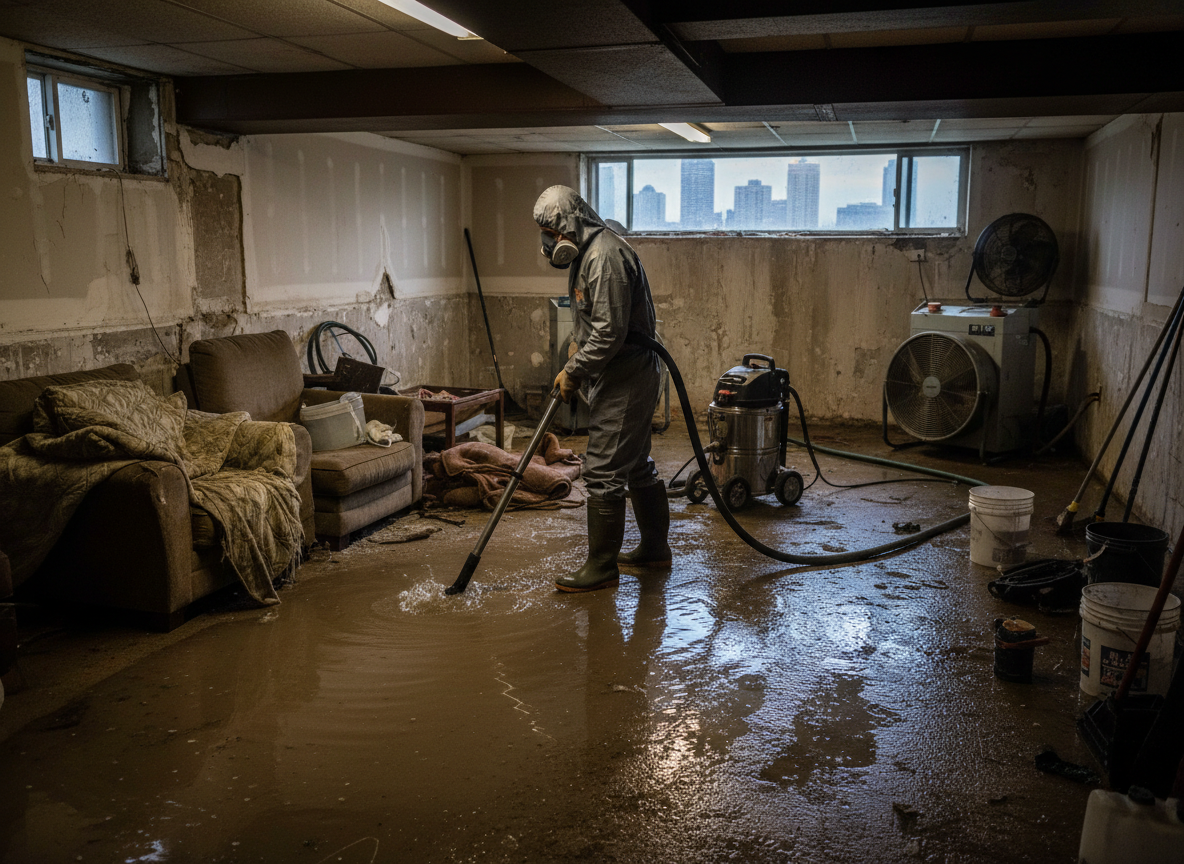
When heavy rains hit Milwaukee, especially during our humid continental climate's warm summers or when snowmelt overwhelms drainage systems in neighborhoods like Bay View or Riverwest, storm water damage can quickly become a serious issue. Older homes common in areas like the East Side or Walker's Point might have foundations more susceptible to seepage, and the proximity to Lake Michigan means rapid water level changes can impact the Lakefront areas and even flood basements in low-lying sections. Our team understands how these local conditions, from the clay-rich soil to the sheer volume of water from intense storms, necessitate a swift and thorough approach to prevent secondary issues like mold growth, particularly in the damp conditions that follow.
Dealing with storm water intrusion requires more than just pumping out water. In Milwaukee, we often see damage that extends beyond visible flooding, affecting structural integrity and hidden areas within the walls and under floors of homes in Wauwatosa or Washington Heights. The cold, snowy winters can also lead to ice dams that cause water backup, while summer thunderstorms can overwhelm the city's storm drains, leading to street flooding that affects properties near Miller Park or the Harley-Davidson Museum. King Water Damage Restoration LLC focuses on a comprehensive cleanup, including drying, dehumidifying, and sanitizing to restore your property and prevent long-term damage, ensuring your home is safe and healthy.
Storm Water Damage Prevention Tips for Milwaukee Residents
Given Milwaukee's climate, proactive measures can significantly reduce the risk and severity of storm water damage. Regularly inspect your home's foundation for cracks and seal them promptly. Ensure your gutters and downspouts are clear of debris, especially before the winter snows and spring rains, and that downspouts direct water at least five feet away from your foundation. Consider installing a sump pump with battery backup, particularly if you live in a flood-prone area like parts of the Third Ward or near the Menomonee River. Maintaining your landscaping to slope away from your house is also crucial. For properties near Glendale or Brown Deer, understanding local drainage patterns can help anticipate potential issues.
Understanding Storm Water Damage vs. Other Water Intrusion
It's important to distinguish storm water damage from other types of water intrusion. While a burst pipe or a leaky appliance involves clean or grey water, storm water is considered black water, carrying potential contaminants from the environment, including sewage, chemicals, and debris. This means cleanup protocols are more stringent and require specialized equipment and protective gear. The rapid, widespread nature of storm flooding, often impacting entire neighborhoods from Shorewood to Walker's Point, also differentiates it from localized leaks. Our process addresses the unique challenges posed by contaminated storm water, ensuring a safe and complete restoration.
Technician insight
In Milwaukee, the thing that catches most people out with storm water damage cleanup is how quickly that cold lake effect air can contribute to secondary mold growth after summer storms, especially in older homes common in neighborhoods like Riverwest. People focus on the immediate water, but the persistent dampness and temperature swings here mean we have to be aggressive with drying and dehumidification.
Basement Flooding After Heavy Summer Storm
A homeowner in Bay View experienced significant basement flooding following a severe thunderstorm that overwhelmed local drainage systems. Upon arrival, we found several feet of standing water mixed with debris and mud. Our team immediately began water extraction, followed by comprehensive drying and sanitization to prevent mold and restore the space.
Storm Water Damage Cleanup Services We Offer
✓Floodwater Extraction
Rapid removal of standing floodwater using industrial-grade pumps and vacuums to prevent further saturation and structural damage.
✓Structural Drying and Dehumidification
Employing specialized equipment like air movers and dehumidifiers to thoroughly dry out affected building materials and prevent mold growth.
✓Contaminated Water Cleanup
Safe and effective removal and sanitization of black water, which often accompanies storm events, to protect health and prevent disease.
✓Mold and Mildew Remediation
Identifying and eliminating mold and mildew that can develop in damp conditions after storm damage, ensuring a healthy indoor environment.
✓Storm Damaged Basement Waterproofing Assessment
Evaluating basement vulnerabilities exposed by storm flooding and recommending solutions to prevent future water intrusion in areas like Riverwest.
✓Debris Removal and Site Clearing
Clearing away debris brought in by storm water, such as mud, leaves, and other materials, to prepare for the restoration process.
How it works
- 1
Emergency Response and Assessment
Upon arrival, we immediately assess the extent of storm water damage, prioritizing safety and identifying all affected areas, from basements in Walker's Point to lower levels near the Third Ward.
- 2
Water Extraction
We use powerful extraction equipment to remove all standing water as quickly as possible, minimizing saturation time for your property's structure and contents.
- 3
Drying and Dehumidification
Industrial-grade air movers and dehumidifiers are deployed to systematically dry out all wet materials, including walls, floors, and furniture, to pre-loss moisture levels.
- 4
Sanitization and Mold Prevention
All affected areas are thoroughly cleaned and sanitized to eliminate contaminants and prevent the growth of mold and mildew, crucial in Milwaukee's humid climate.
- 5
Restoration and Final Inspection
We complete necessary repairs and conduct a final inspection to ensure your property is fully restored to its pre-storm condition and safe for occupancy.
Pricing
Transparent pricing for storm water damage cleanup is provided after an initial assessment.