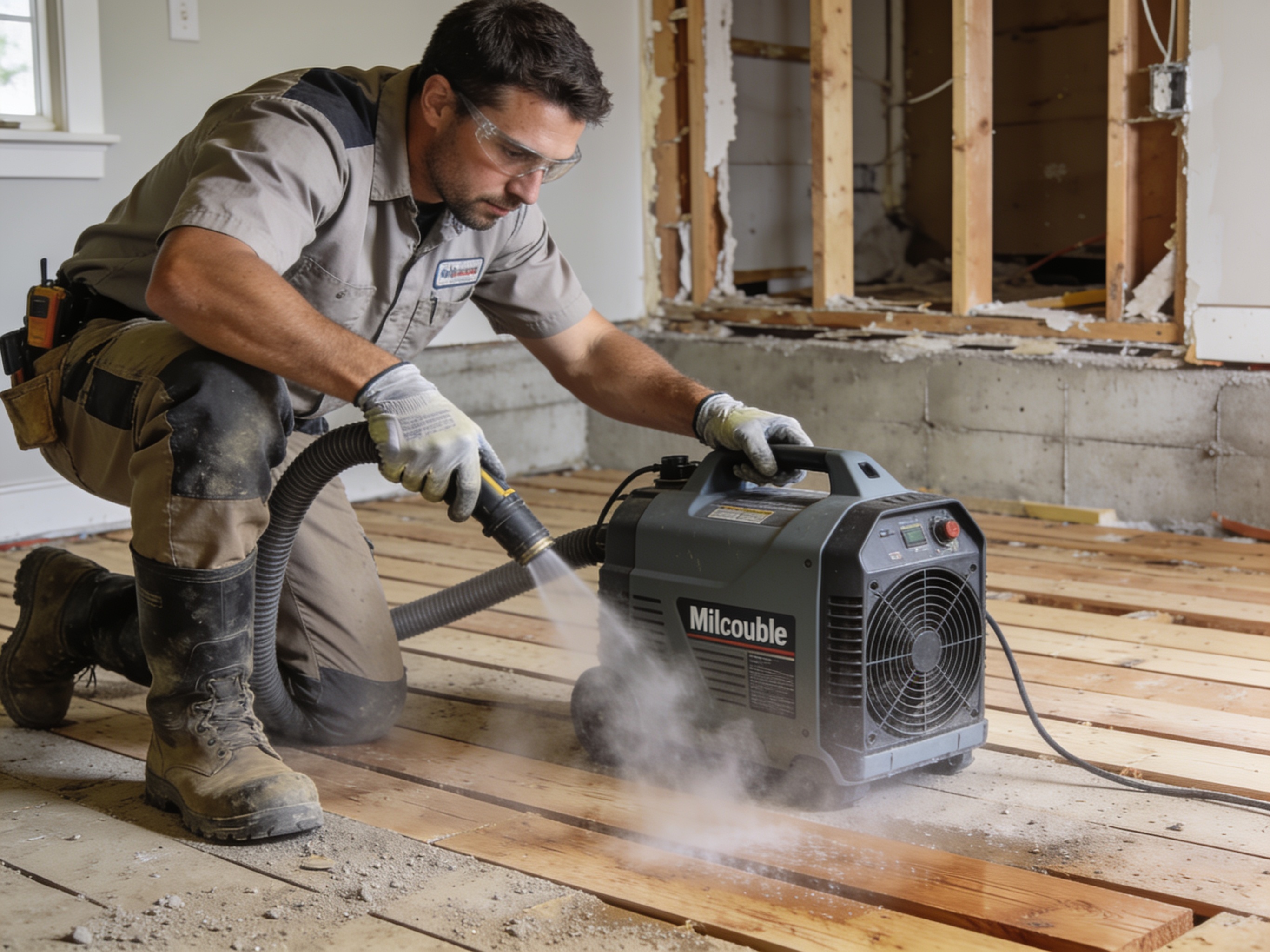
Subfloor drying is a critical step in water damage restoration, especially in a humid continental climate like Milwaukee's. The cold, snowy winters can lead to frozen pipes that burst, while warm, humid summers can exacerbate moisture issues from everyday living or minor leaks. In older Milwaukee neighborhoods like Bay View or Riverwest, with their characteristic vintage housing stock, plumbing systems can be more prone to failure. Moisture trapped beneath the subfloor can quickly lead to structural damage, rot, and the perfect breeding ground for mold, particularly in the crawl spaces common in many homes around Walker's Point or the East Side. Addressing subfloor moisture promptly is essential to prevent long-term, costly repairs and maintain healthy indoor air quality throughout your Milwaukee home.
When dealing with subfloor drying, it's not just about removing standing water; it's about extracting deeply embedded moisture from materials like plywood, concrete, and even soil in crawl spaces. This requires specialized equipment such as high-powered air movers and dehumidifiers capable of reaching below the floorboards. In areas near the Milwaukee Art Museum or along the Lakefront, we sometimes encounter groundwater issues that can complicate drying efforts. Understanding the building science behind moisture migration is key. We need to create an environment where drying can occur efficiently, considering factors like airflow, temperature, and humidity levels to ensure all hidden moisture is eliminated, preventing secondary damage that could affect the structural integrity of homes in Wauwatosa or Shorewood.
The urgency of subfloor drying cannot be overstated. What might seem like a minor leak behind a toilet in a home near Miller Park can, over days, saturate the subfloor and joists, leading to serious structural compromise and the potential for mold growth. This is particularly concerning in humid conditions typical of Milwaukee summers, where moisture can linger. We often see this issue in homes with basements or crawl spaces, common in areas like Washington Heights. Our team uses advanced moisture meters to accurately assess the extent of the problem and monitor the drying process, ensuring that the subfloor and surrounding materials reach safe moisture content levels, thereby safeguarding the property and its occupants from the detrimental effects of prolonged dampness.
Technician insight
In Milwaukee, the thing that catches most people out with subfloor drying is how quickly moisture can wick up into the wall cavities from crawl spaces, especially in older homes common in neighborhoods like Riverwest. People focus on the floor itself, but the hidden moisture in the walls can lead to mold and structural issues if not addressed aggressively. We always check wall cavities adjacent to wet subfloors.
Hidden Leak Causes Subfloor Saturation
A homeowner in the East Side discovered a musty odor and suspected a leak. Our inspection revealed a slow, persistent leak from a bathroom pipe had saturated the subfloor and joists beneath their main living area. We deployed specialized drying equipment, including air movers and dehumidifiers, to extract the deep moisture and prevent structural damage and mold growth, restoring a dry and healthy environment.
Subfloor Drying Services We Offer
✓Hidden Moisture Detection
Utilizing advanced moisture meters and thermal imaging to locate unseen water sources and saturated areas beneath your subfloor.
✓Crawl Space Water Extraction
Expert removal of standing water from crawl spaces, a common area for subfloor moisture issues in Milwaukee homes.
✓Subfloor Dehumidification
Deploying industrial-grade dehumidifiers to actively remove moisture from the air and materials beneath your flooring.
✓Air Mover Placement for Subfloor Drying
Strategic placement of high-velocity air movers to accelerate evaporation and drying of saturated subfloor materials.
✓Mold Prevention After Water Intrusion
Implementing immediate drying and containment protocols to prevent mold and mildew growth in damp subfloor environments.
✓Wood Subfloor Structural Drying
Specialized drying techniques to prevent warping, swelling, and rot in wooden subfloor joists and sheeting.
✓Concrete Subfloor Moisture Removal
Effective methods for drawing out moisture trapped in concrete subfloors, common in basements and slabs.
How it works
- 1
Assessment and Water Extraction
Our technicians arrive promptly to assess the extent of subfloor water damage. We then use specialized equipment to extract any standing water, minimizing immediate harm.
- 2
Moisture Mapping and Drying Setup
We use moisture meters to identify all affected areas. High-velocity air movers and industrial dehumidifiers are then strategically placed to begin the drying process.
- 3
Continuous Monitoring and Adjustment
We regularly monitor moisture levels and adjust equipment placement and settings as needed to ensure efficient and thorough drying of the subfloor and surrounding structure.
- 4
Post-Drying Inspection and Verification
Once drying targets are met, we conduct a final inspection to confirm moisture levels are safe and to ensure no secondary damage like mold has begun.
Pricing
Pricing for subfloor drying can vary based on the extent of water damage, the type of subfloor (wood vs. concrete), and the accessibility of the affected area. We provide upfront quotes after an initial assessment.