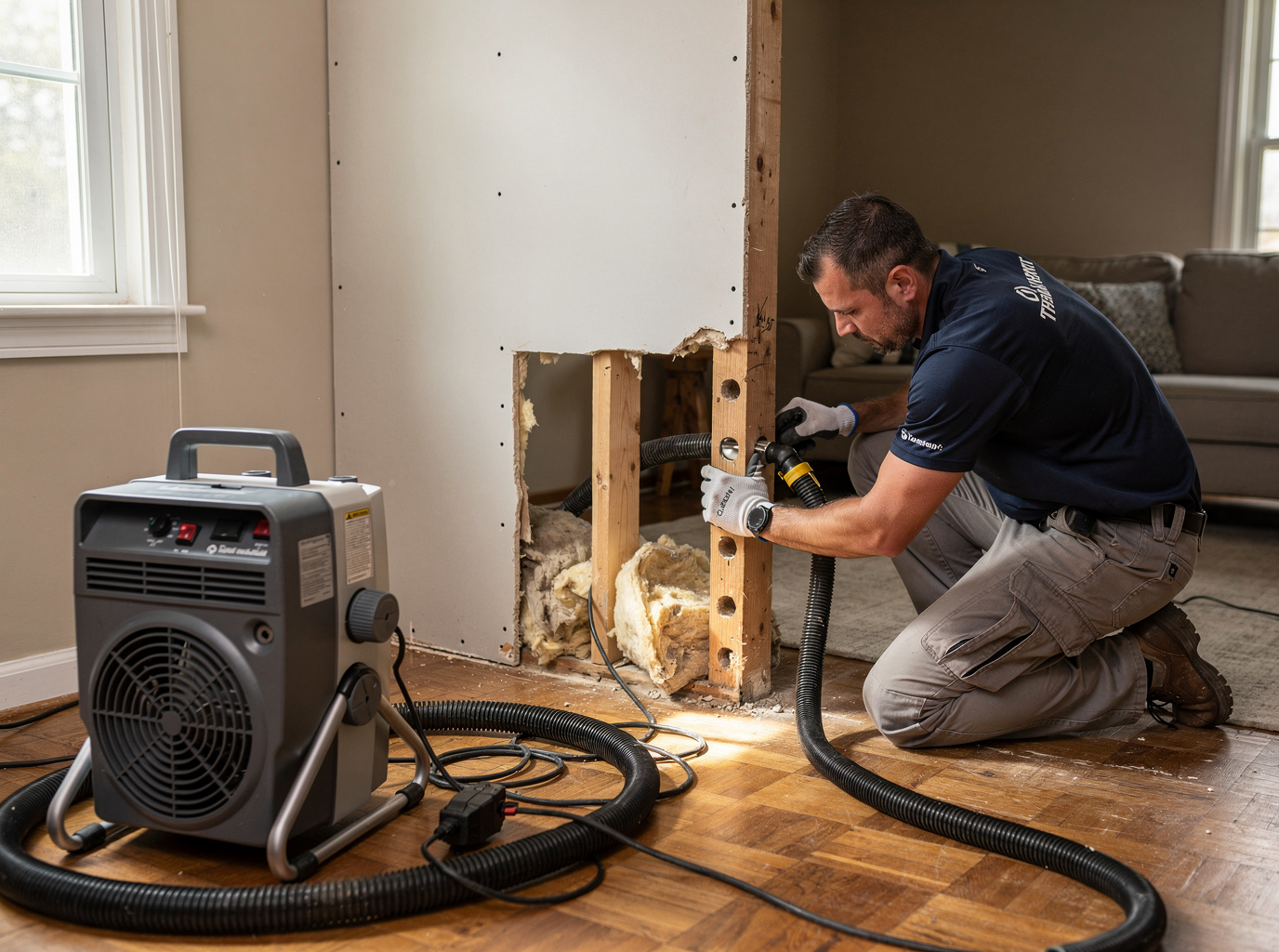
When water infiltrates your Milwaukee home, it doesn't just stay on the surface. Moisture can seep deep into wall cavities, creating a hidden breeding ground for mold and leading to structural compromises. This is particularly common in older Milwaukee neighborhoods like Bay View or Riverwest, where plumbing may be aging or in structures common in the Third Ward. The humid continental climate of Milwaukee, with its cold, snowy winters and warm, humid summers, exacerbates the problem. Persistent dampness behind drywall can go unnoticed for weeks, allowing mold spores to multiply and potentially affect indoor air quality. Addressing this requires specialized equipment and techniques to extract moisture from these enclosed spaces before it causes irreversible damage to insulation, wood framing, and drywall.
Drying wall cavities is a meticulous process demanding more than just fans. In Milwaukee homes, which often feature dense construction and varied plumbing systems, water can travel surprising distances within wall voids. We utilize advanced moisture meters to pinpoint the exact extent of saturation, ensuring no area is overlooked. Our technicians employ specialized drying equipment, such as low-profile air movers and dehumidifiers, strategically placed to create airflow within the confined spaces of your walls. This targeted approach is crucial in preventing secondary damage like warping of wood studs, deterioration of insulation, and the growth of black mold, which can thrive in the dark, damp conditions often found behind plaster or drywall in areas like Washington Heights or the East Side.
The challenge of wall cavity drying in Milwaukee extends to the variety of building materials encountered. Older homes in areas like Walker's Point or Shorewood might have lathe and plaster walls, which can absorb and hold moisture differently than modern drywall. Furthermore, the proximity to Lake Michigan means certain areas can experience higher ambient humidity, making the drying process more complex. We understand how to adapt our methods based on whether we're working with traditional materials or newer construction found in rapidly developing areas near Glendale or Brown Deer. Our goal is always to restore your home's integrity and prevent long-term issues stemming from hidden water intrusion, ensuring a healthy living environment.
Seasonal Considerations for Wall Cavity Drying in Milwaukee
The climate in Milwaukee presents unique challenges for water damage restoration, especially when dealing with hidden moisture in wall cavities. During the cold, snowy winters, freezing temperatures can exacerbate existing water damage by causing pipes to burst, leading to significant water intrusion into wall spaces. The subsequent thawing can then create widespread saturation. Conversely, warm, humid summers can slow down the drying process, as the ambient air already holds a considerable amount of moisture. This means that even with advanced drying equipment, achieving dryness in wall cavities can take longer during peak summer months. Our team is experienced in adjusting drying strategies based on these seasonal fluctuations to ensure effective moisture removal and prevent mold growth year-round, whether the issue originated from a plumbing leak or a building envelope failure.
Technician insight
In Milwaukee, the thing that catches most people out with wall cavity drying is how quickly moisture can spread behind plaster or drywall, especially in older homes with potentially outdated plumbing. The humid summers here can also make the drying process significantly longer than in drier climates, requiring persistence and specialized equipment to truly get those wall voids dry.
Hidden Leak Behind Drywall in Riverwest
A homeowner in Riverwest noticed a faint musty odor and a small stain on their living room wall. Upon inspection, we discovered a slow pinhole leak in a pipe behind the drywall, which had saturated the wall cavity over several weeks. We deployed targeted air movers and dehumidifiers to dry the void, preventing mold growth and structural damage to the studs.
Wall Cavity Drying Services We Offer
✓Hidden Water Leak Detection
Utilizing advanced tools to locate leaks within walls that aren't visible, preventing further saturation and damage.
✓Mold Prevention After Water Intrusion
Implementing targeted drying and dehumidification within wall cavities to inhibit mold growth before it starts.
✓Structural Drying Behind Drywall
Applying specialized air movers and dehumidifiers to extract moisture from wall cavities and protect framing.
✓Plumbing Leak Wall Cavity Drying
Focusing on drying wall spaces affected by burst pipes or pinhole leaks common in older Milwaukee plumbing.
✓Insulation Drying Services
Carefully drying saturated insulation within wall cavities to restore its R-value and prevent mold.
✓Post-Flood Wall Cavity Restoration
Addressing moisture trapped in wall cavities after significant flooding events near the Milwaukee River or Lakefront.
How it works
- 1
Assessment and Moisture Mapping
Our technicians begin by thoroughly inspecting the affected area using moisture meters and thermal imaging to precisely identify the extent of water saturation within the wall cavities. This step is crucial for planning an effective drying strategy.
- 2
Controlled Water Extraction
Depending on the situation, we may use specialized equipment to extract standing water from wall cavities. This is followed by creating controlled airflow to initiate the drying process.
- 3
Targeted Airflow and Dehumidification
We strategically place high-velocity air movers and industrial-grade dehumidifiers to circulate air within the wall cavities, drawing out moisture vapor and reducing humidity levels.
- 4
Monitoring and Verification
Throughout the drying process, we continuously monitor moisture levels using calibrated equipment to ensure the wall cavities are drying effectively and efficiently, working towards pre-loss moisture content.
- 5
Final Inspection and Mold Prevention
Once drying is complete, a final inspection confirms that all moisture has been removed. We then take steps to prevent mold growth, ensuring a healthy environment.
Pricing
Transparent pricing for wall cavity drying, with costs influenced by the extent of water damage and drying time required.